
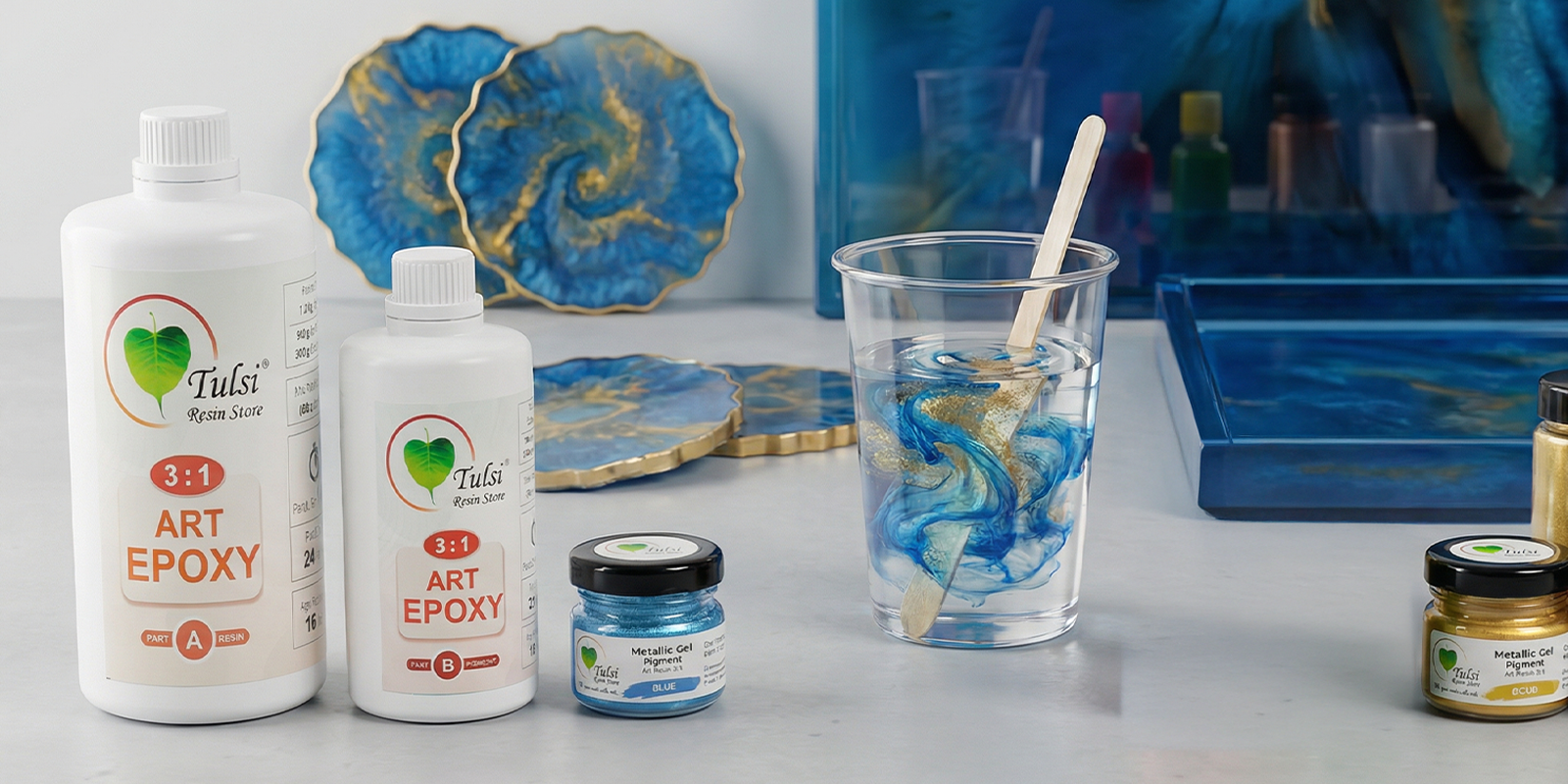
Every artist remembers the first time colour behaved unexpectedly in resin.
The shade looked perfect in the cup, but once cured, it felt heavier, duller, or louder than imagined. The metallic spread too far. The pink lost its softness. The layers blended when they were meant to stay distinct. Moments like these quietly teach artists that colour pigments are not just about shade. They are about behaviour.
Resin art sits at the intersection of control and surprise. Understanding how colour pigments move, settle, reflect light, and cure helps artists across styles work with confidence rather than guesswork.
This is where pigment choice becomes part of the creative process itself.
How Different Artists Experience Colour Pigments in Resin
Not every artist uses resin the same way, and colour pigments respond differently depending on technique, scale, and intention.
Jewellery makers often need precision. A resin pigment that spreads too much can blur fine details inside bezels or molds.
Fluid artists look for movement. For them, pigment density determines how patterns bloom or collapse.
Home decor artists working on trays, coasters, and tabletops care about consistency. Colour shifts between batches can disrupt an entire collection.
Mixed media artists often push boundaries, combining pigment art techniques with texture, embeds, or layered pours.
The right pigment for resin feels different to each of these artists, even when they are using the same base material.
Colour Pigments vs Epoxy Resin and Dyes
One of the most common points of confusion for artists lies between epoxy resin and dyes versus pigments.
Dyes dissolve completely. They create transparent colour that moves freely with the resin. This makes them ideal for deep pours or glass-like effects, but harder to control in layered work.
Pigments contain particles. These particles interact with gravity, viscosity, and curing time. This is why colour pigments allow artists to build opacity, texture, and surface interest.
An epoxy resin color pigment offers stability. The colour stays where it is placed, making it easier to plan outcomes across multiple pours.
Artists often reach for pigments when they want consistency and depth rather than pure transparency.
Pigment Compatibility With Different Epoxy Resins
Artists often discover that the same colour pigments behave differently when used with different epoxy resins. This happens because every resin has its own viscosity, curing speed, and flow pattern.
A slow-curing resin gives pigments more time to move, blend, or settle. A fast-curing resin tends to lock colour in place sooner. Thicker resins hold resin pigment closer to where it is poured, while thinner resins allow more spreading and blending.
This is why a design that looks controlled in one resin system can feel unpredictable in another. Understanding this interaction helps artists choose the right epoxy resin color pigment and adjust techniques rather than changing colours unnecessarily.
Testing pigments with the specific resin you use most often leads to more consistent results and fewer surprises.
Choosing Colour Pigments Based on Finish, Not Just Shade
Experienced artists rarely choose pigments based only on colour names. They choose based on finish.
Soft finishes come from translucent art resin tint applications. These allow light to travel through layers, creating a sense of depth.
Bold finishes rely on opaque colour pigments that block light and define form clearly.
Pearl and shimmer finishes depend on reflective particles that shift as the viewer moves.
Metallic finishes introduce drama and contrast, often becoming focal points within a composition.
Understanding finish first helps artists avoid disappointment after curing.
When to Use Dry Pigments, Powder Pigments, and Gel Pigments
Different pigment formats exist because artists need different types of control.
Dry Pigments
Dry pigments are pure colour particles with no binder. They are often used in advanced pigment art techniques.
They work well for:
- Veining
- Petri-style effects
- Accent highlights
Artists choose dry pigments when they want strong visual impact and are comfortable managing dispersion.
Powder Pigments
Powder pigments often include mica or mineral-based colours. These powders float, shimmer, and react visibly within resin.
They are ideal for:
- Ocean art
- Geode designs
- Abstract layering
Powder-based metallic pigments introduce movement that feels organic rather than uniform.
Gel Pigments
Gel pigments include a binder that helps colour stay evenly suspended.
They are especially useful for:
- Mold casting
- Flat pours
- Batch production
Gel-based epoxy color pigment allows artists to repeat results without constant adjustment.
Metallic Pigments Without Losing Control
Metallic effects can elevate resin art, but they require restraint.

Metallic pigments respond strongly to resin flow. Too much movement can cause them to spread thin or overpower other colours.
This is where metallic pigment paste becomes valuable. The paste format gives artists greater control over placement and intensity.
Artists often use metallic paste for:
- Defined veins
- Borders
- Accent swirls
Used sparingly, metallics enhance depth without dominating the composition.
Working With Pink Pigment in Resin Art

Pink pigment has a unique personality in resin. It is no wonder, then, that it is one of the most trending pigments in resin art these days.
Light pinks can turn chalky if overused. Deeper pinks can dominate a palette faster than expected. Artists learn quickly that pink benefits from layering and dilution.
Soft pink effects are best achieved using translucent resin pigment in thin pours. This preserves warmth without flattening the tone.
Pink pairs well with neutrals, metallic accents, and clear negative space, allowing it to feel intentional rather than decorative.
Techniques Artists Use to Control Colour Pigments
Colour control improves with technique, not just product choice.
Artists often rely on:
- Incremental pigment addition
- Separate mixing cups for layered work
- Viscosity timing to guide movement
- Temperature awareness during curing
Using high-quality resin epoxy pigments reduces the need for excessive pigment loading, which helps maintain resin strength and clarity.
Consistency comes from observation as much as from experience.
How Environment Affects Colour Pigments in Resin Art
Temperature and humidity influence how pigment for resin behaves, often in ways artists notice only after curing.
Warm environments
- Resin flows more easily, allowing colour pigments to spread and blend faster
- Blooming effects appear softer and more fluid
- Metallic finishes can disperse wider across the surface
- Layers may merge more quickly during curing
Cool environments
- Resin thickens and slows pigment movement
- Colour pigments stay more defined and controlled
- Metallic particles settle gradually, creating sharper patterns
- Colour separation appears stronger and more structured
Humidity changes
- Affects curing speed and surface finish
- Can subtly alter how pigment looks once fully cured
- Impacts gloss and clarity, especially in layered work
Artists who adjust pigment timing and pour technique based on their environment often achieve more consistent and predictable colour results throughout the year.
Using Pigment Binders for Precision
Pigment binders help artists manage powders more predictably.
A binder coats pigment particles, allowing them to mix smoothly into resin without clumping. This improves suspension and colour stability.
Binders are particularly useful when working with:
- Powder pigments
- Metallic powders
- Custom colour blend

Artists who frequently experiment benefit from keeping a pigment binder on hand.
Mini Pigments for Exploration and Detail Work
Mini pigments encourage experimentation without waste.
They allow artists to test colour interactions, try unfamiliar shades, or refine techniques on a smaller scale.
Mini pigments are especially useful for:
- Sample boards
- Jewellery
- Accent pours
- Colour testing
Artists exploring new styles often begin with mini formats before committing fully.
How Artists Test Colour Pigments Before Final Pours
Experienced artists rarely pour colour directly into a final piece without testing first. Testing helps understand how colour pigments will look once cured, not just when mixed.
Many artists use small silicone molds, leftover resin from previous pours, or clear sample sheets to test resin pigment strength and opacity. This makes it easier to judge how much pigment is needed and whether layering will preserve clarity.
Testing also helps artists see how epoxy color pigment reacts with additives like metallics or translucent tints. These small experiments reduce wasted material and increase confidence before committing to larger projects.
Common Pigment Issues Artists Face and How They Fix Them
Even with high-quality materials, artists sometimes encounter pigment-related challenges. Understanding why they happen makes them easier to fix.
-
If colour sinks or separates, it often means the resin pigment was added too heavily or the resin viscosity was too low. Reducing pigment quantity or waiting slightly before pouring helps improve suspension.
-
If colours look muddy, too many pigments may have been mixed together. Limiting the palette or layering colours instead of blending them preserves clarity.
-
If metallic effects spread too far, using metallic pigments more sparingly or switching to a metallic pigment paste gives better control.
-
If cured colour appears dull, thinner layers and better light penetration usually restore vibrancy, especially when working with art resin tint or lighter shades.
Most pigment issues are technique-related rather than product-related, and small adjustments usually make a noticeable difference.
Where Tulsi Resin Fits Into an Artist’s Practice
Tulsi Resin Store supports artists at every stage of their journey. From beginners discovering colour pigments for the first time to experienced makers refining their process, the store offers thoughtfully curated art and craft supplies online.
The pigment collections include:
- Reliable resin pigments
- Translucent colour options
- Metallic gels and pastes
- Pigment binders
- Mini pigments for testing
Each product is selected with artist workflows in mind, helping creators focus on expression rather than troubleshooting.
Growing as an Artist Through Colour Confidence
Colour mastery does not happen overnight. It grows through trial, observation, and understanding how colour pigments behave inside resin.
As artists learn to read pigment movement, predict curing outcomes, and balance intensity with restraint, their work gains clarity and confidence.
Choosing the right pigment is less about finding the perfect shade and more about understanding how colour lives within resin. When that understanding deepens, creative freedom follows naturally.
Frequently Asked Questions About Colour Pigments for Resin Art
1. What are colour pigments and why are they better than dyes for resin art?
Colour pigments contain fine particles that stay suspended in resin, giving artists more control over opacity, layering, and texture. Unlike dyes, pigments allow you to build depth, create defined shapes, and achieve consistent results across multiple pours, which is why many artists prefer pigment for resin projects.
2. How much epoxy color pigment should I add to resin?
The amount of epoxy color pigment depends on the effect you want. For translucent finishes, a few drops of resin pigment are enough. For opaque work, gradual addition works best. Overloading pigments can affect curing, so artists usually test small batches before committing to a full pour.
3. What is the difference between metallic pigments and metallic pigment paste?
Metallic pigments are often powders that create shimmer and movement in resin, while metallic pigment paste offers more control and even distribution. Artists use paste when they want defined veins or accents and powders when they want organic flow and visual texture.
4. When should I use powder pigments instead of gel or liquid pigments?
Powder pigments are ideal for expressive pigment art, ocean pours, and geode styles where movement and layering matter. Gel pigments are better for molds and flat surfaces, while liquid resin epoxy pigments suit detailed colour work. The choice depends on how much movement you want inside the resin.
5. Can I mix different resin pigments together?
Yes. Mixing resin pigment shades is common in resin art. Artists often blend pigments to create custom colours or subtle transitions. Using compatible resin epoxy pigments and mixing slowly helps maintain colour clarity and even dispersion.
6. What is art resin tint and when should artists use it?
An art resin tint is used to create soft, translucent colour effects without overpowering the resin. Artists use tints for layered pours, river-style work, and designs where light passing through the piece adds visual depth.
Ocean Resin Art Techniques Every Beginner Should Try
Top Flower Silicone Moulds to Make Your DIY Resin Projects Stand Out