
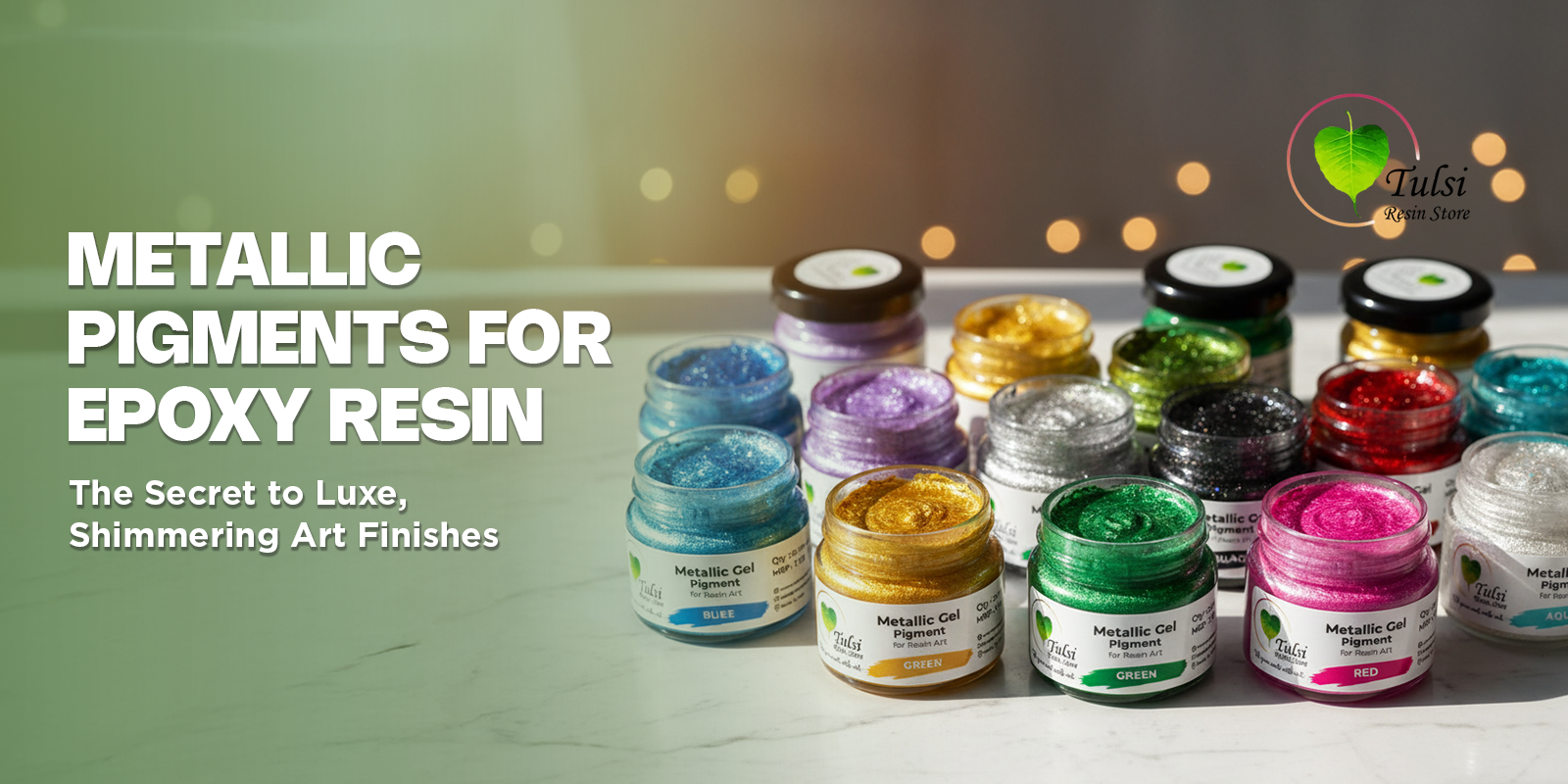
Resin Artists desire vivid colours that remain smooth and represent a premium look after they are cured. Metallic Pigments for Epoxy Resins allow you to easily achieve the same look. By using these pigments, you’re able to create a rich colour block effect, reflective shine, and full coverage. When used correctly, they turn simple resin work into shimmering finishes that look studio-grade.
If you work on trays, coasters, clocks, nameplates, or wall panels, metallic pigments give your art a strong visual impact with very little product.
Why Metallic Pigments Work So Well in Resin
Metallic pigments stay suspended in resin for long periods. This helps the colour spread evenly without breaking. You also get stronger opacity compared to regular pigments. Even one small scoop can change the entire design.
You gain clear advantages.
• Strong colour payoff
• Smooth consistency
• Even blending
• Reflective shine
• Stable results after curing
These points matter when you want predictable outcomes in every batch.
Popular Shades You Can Use
Artists tend to gravitate toward using metallics because of the numerous options available and how they integrate well into a variety of themes. Depending on the design, you may either choose from the very deep, bolder colours or softer shades of colour.
The pigments are available in many shades of colour, including gold, champagne, bronze, silver, black, violet, blue, navy blue, green, pink, dark pink, yellow and orange.
Many artists use the complete metallic sets when they have larger orders and need several colours. The options available for you include metallic gel pigments, pearl pigments, pigment binder and gel pigment sets. All of these choices give you control over the opacity, shine and texture.
How to Mix Metallic Pigments Correctly
You can mix metallic pigments with epoxy in two simple methods. Both give clean results.
Method 1 - Mix a small amount of pigment into a small resin cup. After it blends fully, add it to the main resin batch.
Method 2 - Sprinkle pigment directly into resin and stir slowly.
A clear process helps you get a smooth colour.
-
Measure resin and hardener accurately.
-
Mix for two to three minutes.
-
Add pigment in small parts.
-
Stir until the texture looks even.
-
Pour only when the colour is uniform.
Use more pigment for heavy coverage. Use less pigment for soft shimmer.
Where Metallic Pigments Work Best
Metallic pigments suit many resin art projects because they blend well and cure evenly. You can use them alone or combine them for layered colour.
Practical ideas include resin coasters, clocks, trays, geode art, MDF nameplates, wall panels, bookmarks, and jewellery.
-
Coasters - Gold or bronze work for marble effects. Use white or black as your base.
-
Clocks - Champagne or silver create soft backgrounds. Add deep blue or black for depth.
-
Nameplates - Use metallic pigments on borders or lettering areas to highlight text.
-
Geode art - Use metallic powders for ring detailing.
-
Trays - Dark metallic tones suit formal decor. Light metallic tones suit pastel or soft pieces.
-
Small charms - Use metallic pigments for uniform colour in moulded pieces.
Beginners can start with coasters or small MDF boards. Experienced artists can try multi-layer pours for dimension.
Tips for Better Results
These steps help you avoid issues.
-
Test colours in small samples.
-
Use pigment binder with powder pigments.
-
Seal MDF bases before pouring.
-
Use a heat gun on low to remove bubbles.
-
Keep your work surface level.
If the pigment settles, mix again before pouring. If the colour looks streaky, mix for one extra minute.
Why Metallic Pigments Give a Luxe Finish
Metallic pigments reflect light across the cured resin surface. This creates a fuller and more vibrant finish, and the colour appears smooth and full. The combination of metallic pigments with glossy epoxy will enhance the shine of your finished piece. It will produce a clear, polished and more finished appearance. You get a premium result without extra tools.
This is why many artists prefer metallic resin pigment for trays, clocks, and statement artwork.
Conclusion
At Tulsi Resin Store, you get a wide selection of Metallic Pigments for Epoxy Resin. The range includes metallic gel pigments, pearl pigments, pigment binders, and complete sets. These pigments mix smoothly, cure cleanly, and stay bright. You can pair them with resin, MDF bases, moulds, and art tools from the store to create consistent resin artwork for your customers or personal use.
Why Custom Metallic Stickers Are Perfect for Resin Nameplates and Gifts
How Artists Use a Blow Torch for Art to Enhance Their Creations