
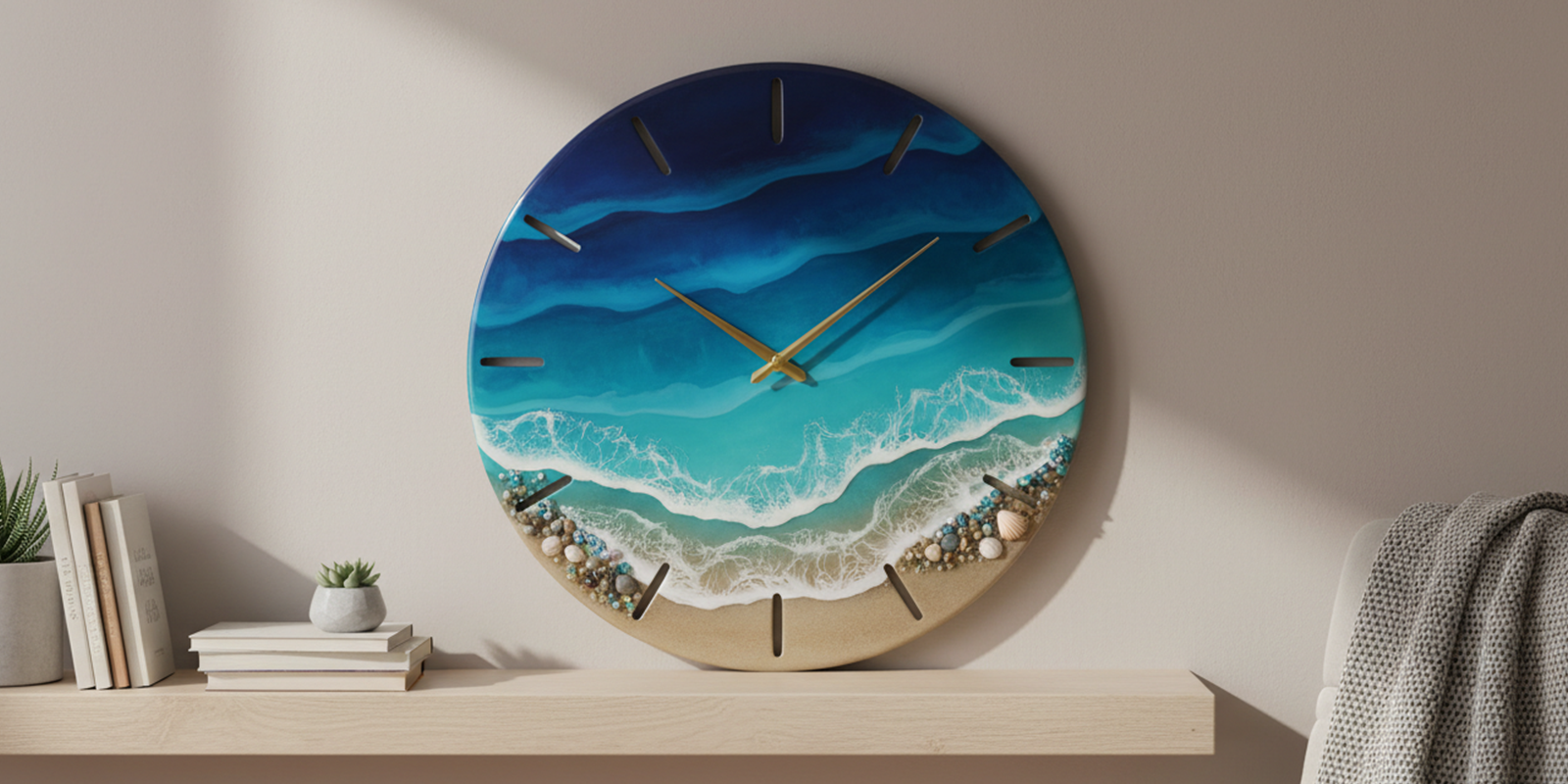
There is something deeply calming about watching ocean resin art come together. The gentle movement of colours, the way waves form without being forced, the slow transformation from liquid to landscape. For many beginners, ocean resin art becomes the first step into resin because it feels familiar. We already understand the sea. We have seen waves, beaches, shorelines, and tide patterns all our lives. Resin simply gives us a way to recreate that memory on a surface.
Ocean resin art is not just about pouring blue and white resin. It is about understanding flow, timing, temperature, pigment behaviour, and wave control. When these elements come together, even simple pours can look layered, realistic, and immersive. This guide breaks down ocean resin art techniques every beginner should try, using practical steps, real tips, and artist-tested methods that make learning smoother and results more predictable.
Whether you are trying ocean resin painting for the first time or exploring sea resin art as a new style, this article focuses on clarity, creativity, and confidence.
Why Ocean Resin Art Is the Best Starting Point for Beginners

Ocean resin art offers a forgiving learning curve. Mistakes often blend into the artwork rather than standing out. The organic nature of waves, foam, and water movement allows beginners to explore resin art techniques without rigid expectations.
Here is why ocean resin art works so well for first-time resin artists.
- Colours blend naturally instead of sharply
- Flow lines look intentional even when unplanned
- Layering feels intuitive rather than technical
- Small errors often enhance realism
- Simple tools create complex results
Many beginners start with epoxy ocean art because it teaches essential resin skills like working time, heat control, pigment ratios, and surface leveling. These fundamentals carry forward into every other resin style.
Understanding the Visual Elements of Ocean Resin Art
Before learning techniques, it helps to understand what makes ocean resin art visually convincing. The ocean is built in layers, not colours alone.
Every strong ocean theme resin art piece includes:
- A deep water base
- Transitional shallow tones
- Shoreline gradients
- White wave foam
- Negative space or sandy textures
Ocean resin painting is about recreating depth and movement, not perfect symmetry. Sea resin art looks best when it feels alive and slightly unpredictable.
Essential Resin Art Techniques Used in Ocean Resin Art
Ocean resin art relies on a combination of foundational resin art techniques applied in a specific sequence. Beginners benefit from mastering these core methods first.
Layered Pour Technique for Depth
Layering is the backbone of ocean resin art.
- Start with darker blues for deep water
- Transition to lighter aqua shades
- Finish with translucent or sandy tones
Allow partial curing between layers when working on larger pieces. This prevents colour bleeding and keeps layers visually distinct.
Controlled Heat Movement
Heat helps guide resin rather than push it.
- Use a heat gun for wide movement
- Use a torch for sharper wave edges
- Apply heat slowly and evenly
Too much heat creates bubbles or muddy colours. Gentle passes give cleaner results.
Tilt and Flow Method
Tilting replaces brushes in epoxy ocean art.
- Tilt the surface instead of dragging tools
- Let gravity guide wave movement
- Pause between tilts to observe flow
This technique makes ocean resin painting feel more organic.
How to Create Ocean Waves with Resin Step by Step
One of the most searched questions in resin art is how to create ocean waves with resin. Waves look complex, but they follow repeatable steps.
Step 1: Prepare the Base Layer
- Pour deep blue resin at one end
- Add lighter blues toward the centre
- Leave space for shoreline tones
This base sets the direction of movement.
Step 2: Add White Resin for Foam
- Mix white resin slightly thicker
- Pour in thin curved lines
- Avoid straight edges
White resin behaves differently from coloured resin, so thickness matters.
Step 3: Apply Heat Strategically
- Use a heat gun to spread white resin
- Use a torch to create cell breaks
- Stop as soon as foam forms
This step defines how to create ocean waves with resin without overworking the surface.
Step 4: Tilt to Shape the Wave
- Tilt forward gently
- Let the white stretch naturally
- Stop before it thins too much
Waves form when white resin stretches, not when it is forced.
Colour Choices That Make Ocean Resin Art Look Real
Colour selection changes everything in ocean resin art.
Avoid flat blues. Real oceans contain multiple tones layered together.
Popular ocean resin art colour combinations include:
- Navy blue with teal and turquoise
- Deep blue with aqua and pearl white
- Emerald green with sand tones
In ocean theme resin art, transparency matters as much as colour. Translucent pigments allow light to pass through layers, creating depth.
Resin Art Supplies Needed for Ocean Resin Art
The right resin art supplies make learning smoother and safer. Beginners often struggle because of poor quality tools rather than technique.
Basic Ocean Resin Art Supplies Checklist
- Epoxy resin suitable for art
- Pigments in blue, white, and sand tones
- Mixing cups with measurements
- Stir sticks with flat edges
- Gloves and surface protection
- Heat gun or small torch
Ocean resin art supplies do not need to be excessive. Fewer high-quality items perform better than many low-grade tools.
Resin Art Kit for Beginners
A resin art kit for beginners simplifies the setup process.
Most kits include:
- Pre-measured resin
-
Basic pigments
- Safety gloves
- Mixing tools
A resin art kit for beginners helps new artists focus on technique instead of sourcing materials. It is often the easiest way to start ocean resin painting without overwhelm.
Surface Selection for Beach Themed Resin Art
Surface choice affects how resin behaves.
Common surfaces for beach themed resin art include:
- MDF boards with sealed edges
- Wooden panels coated with primer
- Canvas boards with reinforced backing
Flat, sealed surfaces prevent resin absorption and uneven curing.
Timing and Environment Tips for Ocean Resin Art
Resin responds to its surroundings.
For consistent results:
- Work in a dust-free room
- Maintain stable room temperature
-
Avoid humidity spikes
Ocean resin art cures best when environmental conditions remain steady throughout the process.
Common Mistakes in Ocean Resin Art and How to Avoid Them
Understanding common mistakes in ocean resin art saves time and materials.
Overheating the Resin
Too much heat causes:
- Colour distortion
- Excess bubbles
- Uneven wave edges
Use heat as a guide, not a tool for control.
Using Resin That Is Too Thin
Thin resin spreads uncontrollably.
- Mix according to manufacturer ratios
- Allow resin to thicken slightly before pouring
This improves wave definition.
Overloading Pigment
Excess pigment affects curing.
- Use small amounts
- Build colour gradually
Balanced pigment use keeps epoxy ocean art glossy and strong.
Exploring Different Ocean Resin Art Styles
Once basics are mastered, ocean resin art opens creative directions.
Popular styles include:
- Minimal shoreline compositions
- Dramatic crashing waves
- Aerial beach views
- Abstract sea resin art
Each style still relies on the same resin art techniques, just applied differently.
Scaling Up from Small Pieces to Statement Art
Beginners often start with coasters or trays.
To scale up:
- Increase batch size gradually
- Work in sections
- Plan wave direction in advance
Large ocean resin art pieces reward patience and preparation.
Caring for Finished Ocean Resin Art
After curing:
- Allow full cure time before handling
- Avoid direct sunlight for prolonged periods
- Clean with soft cloth only
Proper care keeps ocean resin art clear and vibrant for years.
Why Artists Are Choosing Ocean Theme Resin Art as a Signature Style
Ocean theme resin art connects emotionally.
It reminds viewers of travel, calm mornings, and open spaces. That emotional pull makes it popular for home decor, gifting, and gallery pieces. For beginners, it offers both creative freedom and technical growth.
Where to Find Quality Resin Art Supplies Online
Access to reliable resin art supplies matters as much as technique.
About Tulsi Resin Store
Tulsi Resin Store is an online destination for artists who value quality, consistency, and creative support. We provide a wide range of art and craft supplies online, including curated materials suitable for ocean resin art and other resin styles.
From pigments and tools to beginner-friendly options and advanced supplies, Tulsi Resin Store focuses on making resin art accessible and enjoyable for artists at every stage.
When your materials work with you, learning becomes smoother and creativity flows faster.
Common Questions About Ocean Resin Art
What resin is best for ocean resin art?
For ocean resin art, artists usually prefer a clear epoxy resin designed specifically for art applications. It should have a longer working time so colours can flow and waves can be shaped slowly. A resin that self-levels well helps create smooth ocean surfaces without visible lines.
How do beginners start ocean resin art at home?
Beginners can start ocean resin art at home by choosing a small surface like a wooden board or coaster, using limited colours, and following basic resin art techniques such as layering and controlled heat. Starting with a resin art kit for beginners makes the process simpler because it includes measured materials and essential tools.
How do you create realistic ocean waves with resin?
To create realistic ocean waves with resin, white resin is poured over a coloured base and gently moved using heat and tilting. The key is timing. The resin should be thick enough to stretch without spreading too fast. This approach is commonly used when learning how to create ocean waves with resin in epoxy ocean art.
What colours work best for ocean resin painting?
Ocean resin painting looks most natural when multiple shades of blue are layered together. Deep navy or cobalt works well for deeper areas, while aqua and turquoise create shallow water effects. White is used for foam, and sand tones add depth to beach themed resin art.
Why does my white resin sink or disappear?
White resin can sink if it is thinner than the base layer or if too much heat is applied. In ocean resin art, the white resin for waves should be slightly thicker so it stays on the surface long enough to form foam patterns. This is one of the most common mistakes in ocean resin art for beginners.
What surface is best for sea resin art?
Sea resin art works best on flat, sealed surfaces such as MDF boards, wooden panels with primer, or resin-safe boards. A sealed surface prevents resin absorption and ensures smooth curing, which is especially important for ocean theme resin art with layered depth.
How long does ocean resin art take to cure?
Most ocean resin art pieces become touch-dry within 24 hours, but full curing can take 48 to 72 hours depending on resin type, temperature, and humidity. Larger epoxy ocean art pieces may require additional curing time for complete hardness and clarity.
What are the most common mistakes in ocean resin art?
Some common mistakes in ocean resin art include overheating the resin, using too much pigment, pouring resin that is too thin, and rushing the wave creation process. These issues often lead to muddy colours, uneven waves, or trapped bubbles.
Do I need special ocean resin art supplies?
Ocean resin art does not require overly specialized tools, but quality matters. Basic ocean resin art supplies include epoxy resin, pigments, mixing tools, gloves, and a heat source. Using proper resin art supplies improves flow control and final finish quality.
Is ocean resin art safe to do indoors?
Ocean resin art can be done indoors as long as the space is well ventilated. Wearing gloves and following resin safety instructions is important. Working in a clean, dust-free room helps ensure better results and safer handling during ocean resin painting.
Learning Ocean Resin Art
Ocean resin art rewards curiosity. Every pour teaches something new. Waves behave differently each time, and that unpredictability is part of the beauty.
By learning foundational resin art techniques, understanding how to create ocean waves with resin, choosing the right resin art supplies, and avoiding common mistakes in ocean resin art, beginners can build confidence quickly.
Ocean resin painting is not about perfection. It is about movement, layers, and letting the material speak. Start simple, observe closely, and allow each piece to guide the next.
The ocean always has more to teach.
How Artists Use a Blow Torch for Art to Enhance Their Creations
How to Choose the Right Epoxy Colour Pigment for Your Resin Projects